The application video with no budget: one song, one room, one camera
A phone on a tripod, a full song, a real room — how to shoot the video that answers a panel's actual question, and why the produced clip answers a different one.
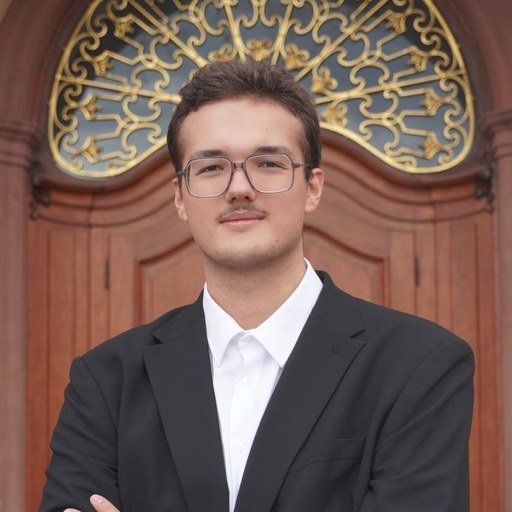
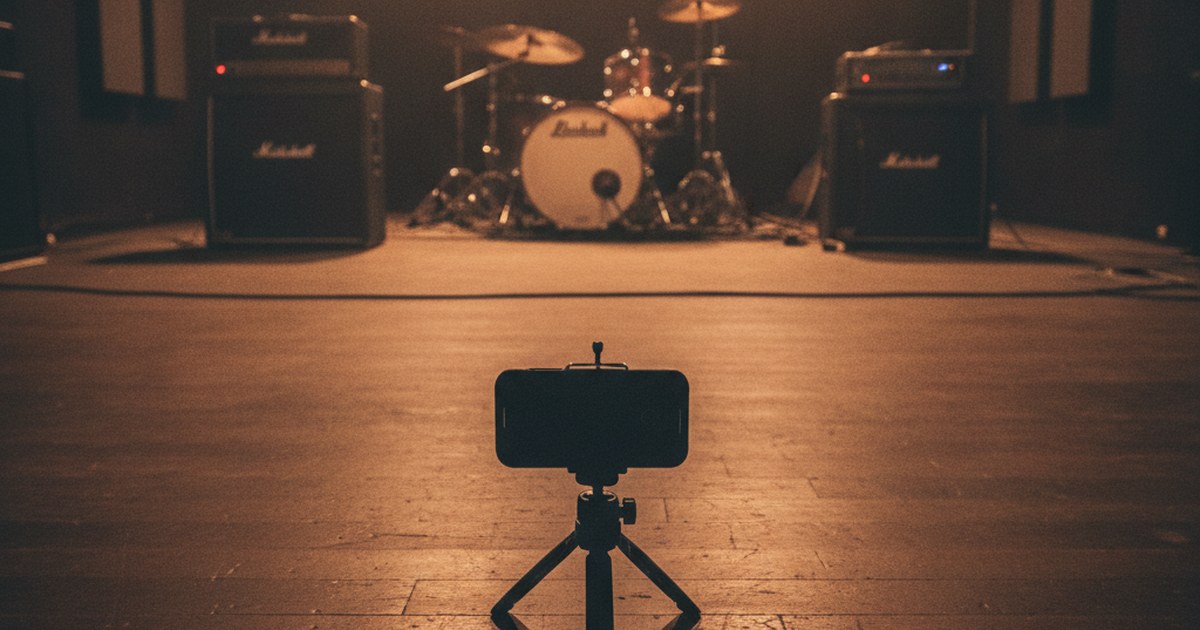
The video a contest application needs costs nothing to shoot: a phone on a tripod, one full song, the room you already rehearse in. The panel's question — can this band play a song through, on a stage — is answered by exactly that footage; why the video is the field that answers it is in What juries read first.
The shoot, start to finish
Set the room and the frame
Rehearsal room or an empty venue — a real room, not a backdrop. Put the camera at chest height, far enough back that every member is in frame, and leave it there: no zooming, no panning. The static frame is the point — it shows the band, not the camera work.
Test the sound before the take
Record a one-minute test and play it back on the phone's own speaker. If the vocals are audible over the band, shoot; if not, move amps down or the singer closer to the camera and test again. Balance the room, not the file — a rehearsal-room sound is expected in a rehearsal-room video.
Light it with what is there
Turn on every light the room has and keep windows behind the camera, not behind the band. That is the whole lighting plan — a visible band in an honest room beats atmosphere you cannot control.
One take, full length, three tries
Play the song like a show: full length, no stopping, mistakes played through. Do three takes, pick one, and resist editing between them — a cut in the middle undoes what the full take proves. If choosing is hard, let someone outside the band pick, the same way they pick your lead track.
Upload it so it plays
Upload it where it plays without a login and put the link in the application field. A video that will not open is on the standard list of application mistakes — test the link logged out before you submit.
Why not the produced clip
A produced video shows what the edit can do; the panel is trying to verify what the band can do. Cuts, angles and colour grading sit exactly on top of the thing being checked — whether you carry a song from start to end, the point Open calls for bands makes about live footage. The full static take is not the poor band's substitute for a music video. For this purpose it is the stronger document, and the music video can wait for the release.
Shoot once, use everywhere
The video is the second item of the three-part booking package — one playing link, one full-song video, a few lines of text. The three items are the same in any country: shoot once, and the package serves clubs and juries alike.
FAQ: A bad-sounding room, multi-camera edits and reuse
Our room just sounds bad — is that a problem?
Room sound is expected; inaudible vocals are the thing to fix. The phone-speaker test exists for exactly that line: if a stranger can follow the song on a phone speaker, the sound is good enough for its job.
Can we use a multi-camera edit of a live show instead?
If the song is complete and the cuts are sparse, a multi-camera live edit answers the same question. One static camera is the budget floor, not a ceiling — what matters is the unbroken song, not the camera count.
Do we need a new video for every application?
One good video serves every call — the check per call is against its conditions and limits, not a new shoot. Re-shoot when the line-up or the sound changes enough that the video stops being true.
Accepting applications right now
17 in the catalog right now · as of 2026-10-28
- SPOT Festival 2027 — Aarhus · closes 2026-10-31
- Wacken Metal Battle — Global (metal) · closes 2026-11-01
- FOCUS Wales 2027 (prior cycle closed ~1 Nov) — Wrexham · closes 2026-11-01
- DMGP (DK Eurovision selection) — DK · closes 2026-11-02
- FIM GDL / FIMPRO (opens ~10 Oct) — Guadalajara · closes 2026-11-10
- Les iNOUïS du Printemps de Bourges (opens ~13 Oct) — national auditions → Printemps de Bourges, FR · closes 2026-11-12
- Treefort Music Fest 2027 (free until ~mid-Sep, then $10–20; via Submittable) — Boise · closes 2026-11-20
- SXSW 2027 — Austin, TX, USA · closes 2026-12-18
- NXNE 2027 (form only, no email; opens ~autumn) — Toronto · closes 2026-12-31
- ReZZo (Jazz à Vienne) — FR (jazz) · closes 2027-01-05
Where the video gets sent
The video’s job is the next application. Contests, festivals and open calls by country, with what we know about who may apply and by when. Free, no account.
The short version
Phone on a tripod at chest height, every member in frame, windows behind the camera. Test the sound on the phone's speaker until the vocals carry. Play the song full length, three takes, no cuts, outsider picks. Upload where it plays without a login, test the link, submit. The produced video can wait for the release — the application field wants proof.
We have no inside data on juries. Everything here is either structural — what the calls themselves ask for — or reasoned from the reviewer's situation. The text contains no statistics.
Sources
- No external sources: the shoot is described from practice, the text contains no figures, and it makes no claim about jury behaviour
Updated: 2026-09-13
General information, not legal or tax advice. Any figures are examples, not commitments.
Last reviewed: 13.09.2026
Read next
What juries read first in a band application
The reading order is not a secret — the application form creates it: the link, the live video, the short text. And anything outside the form's fields is not guaranteed a reader.
2026-09-09 · Georgy E.
Application mistakes that disqualify your band before anyone listens
The standard ways entries take themselves out of a contest — an unmet condition, a link that will not play, fields answered with the wrong thing — each with the plain fix.
2026-09-09 · Georgy E.
Open calls for bands: what is actually accepting applications
Contests and festivals taking entries right now — the list is queried live and stays current — plus what selection panels look at first.
2026-09-05 · Georgy E.